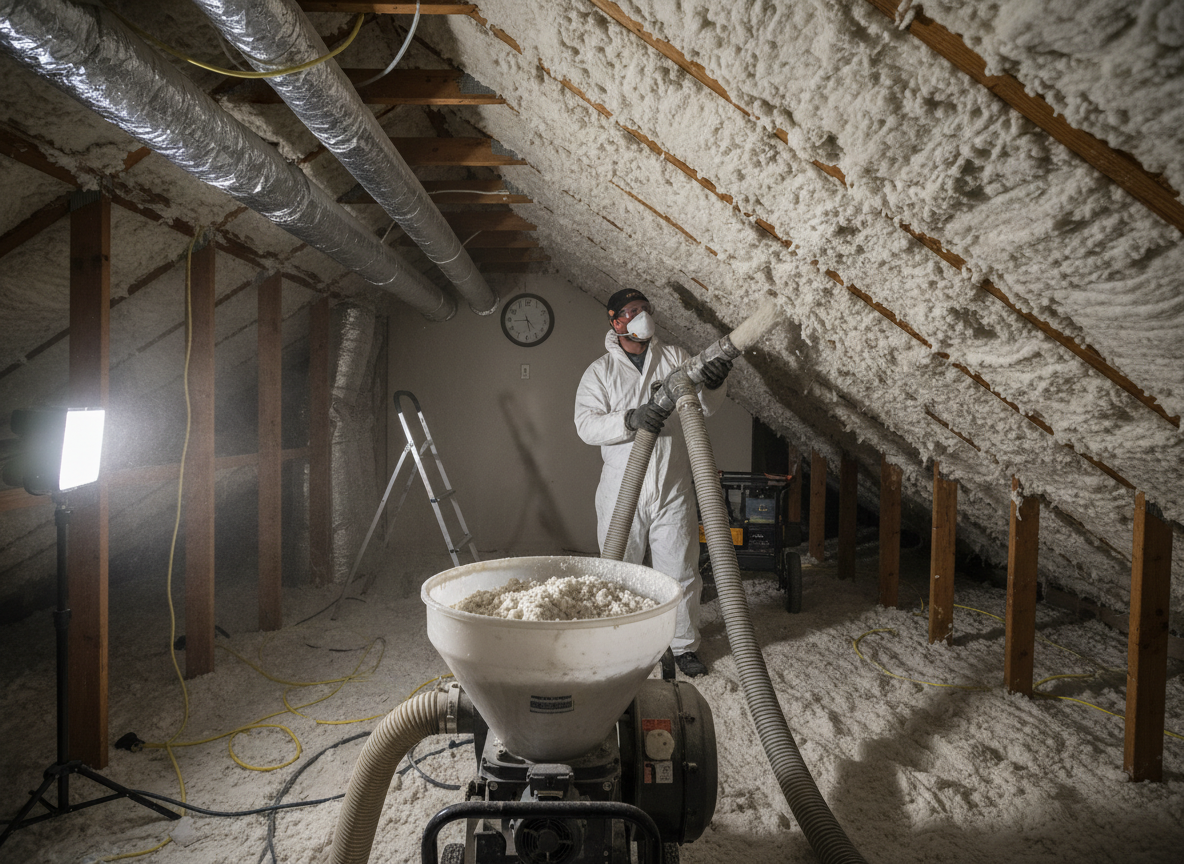
Holladay homes in neighborhoods like Mount Olympus and Cottonwood often date from the 1960s through 1980s with R-19 or lower attic insulation that fails during the county's cold snowy winters and hot summers. Proper 24/7 installation requires checking for existing batts, loose-fill settling, and ventilation paths before adding cellulose or fiberglass to reach current Salt Lake County energy code levels. Edge cases include vaulted ceilings common near Olympus Hills Park and narrow access hatches in older Holladay Village properties that limit material choices.
Semi-arid conditions create large daily temperature swings that push moisture through poorly sealed attics, leading to condensation on roof sheathing if vapor barriers are installed incorrectly. Technicians working at 1895 E Rodeo Walk Dr Suite B200 routinely inspect for ice dam risks along eaves after heavy snow and for heat gain through south-facing roofs in summer. Blowing insulation at night avoids peak heat and lets crews work around occupied homes without disrupting daytime routines in nearby Millcreek and Cottonwood Heights.
Installation crews must account for Salt Lake County's wind patterns that can carry insulation fibers into living spaces if bypasses around recessed lights and plumbing chases are not sealed first. In older stock near Holladay City Park, knob-and-tube wiring or single-pane windows often signal the need for additional air sealing before insulation to prevent future mold issues from trapped moisture.
Technician insight
In Holladay the thing that catches most people out with 24/7 insulation installation is underestimating how quickly cold air infiltrates through unsealed can lights and plumbing stacks in 1970s Mount Olympus homes once the first real snow hits.
Mount Olympus Attic Upgrade
Homeowner in Mount Olympus called after noticing ice along the eaves during a January cold snap. Inspection showed settled fiberglass and multiple unsealed recessed lights allowing warm air to melt snow. Crews arrived at 2 a.m., sealed bypasses, and added cellulose to reach R-49 without disturbing the family. Result was even attic temperatures and no further ice dam formation that winter.
How it works
- 1
Initial Assessment
Evaluate current insulation depth, ventilation, and bypasses in attics across Holladay neighborhoods.
- 2
Material Selection
Choose cellulose or fiberglass based on home age, access, and exposure to winter snow loads.
- 3
Preparation and Sealing
Seal gaps around lights, pipes, and vents to prevent air movement before material is installed.
- 4
Installation and Verification
Blow or lay insulation to target R-value then confirm coverage and ventilation remain intact.
Pricing
Cost depends on attic size, existing insulation depth, and access difficulty; quotes provided after inspection.