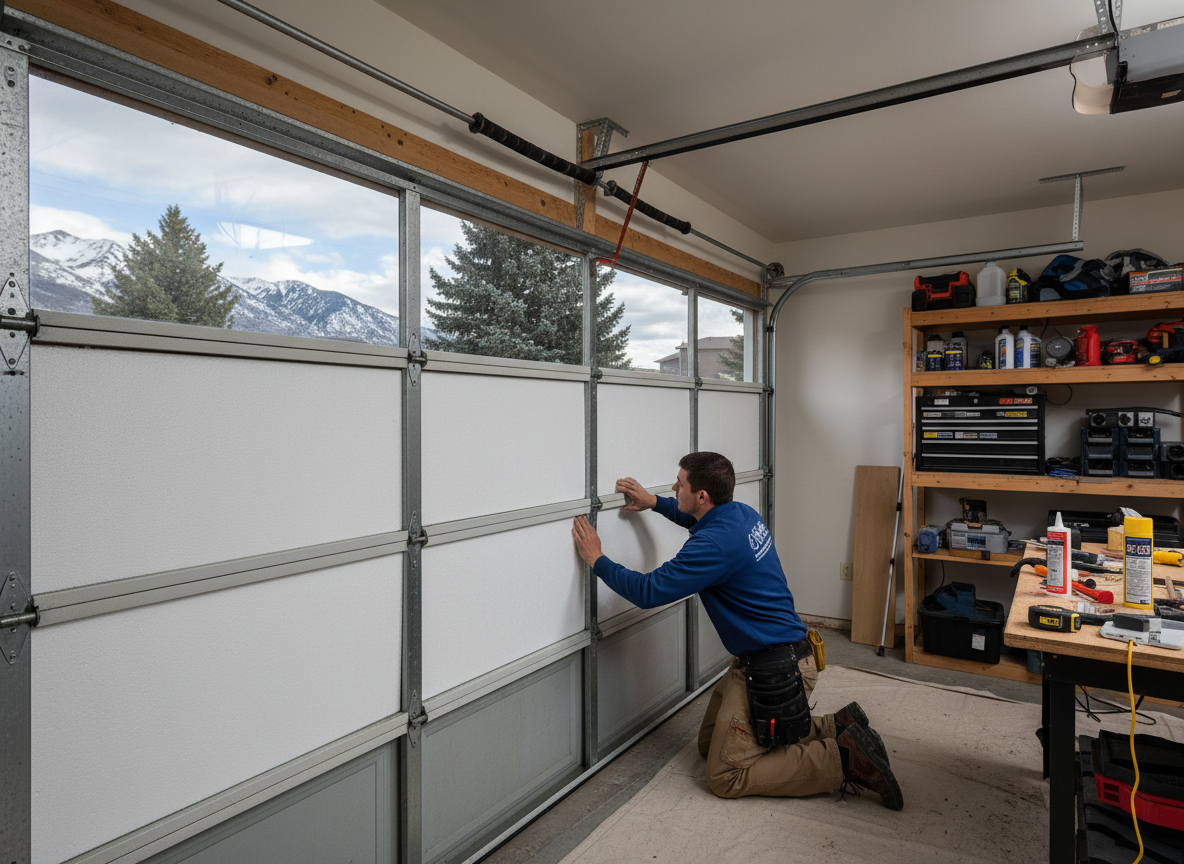
Holladay homes built before the 1990s often have single-layer steel garage doors that let cold air move straight into the attic space above. In our semi-arid climate the temperature can swing from below freezing on snowy January nights to over 95 degrees in July, so the uninsulated door becomes a direct path for heat loss in winter and heat gain in summer. Adding rigid foam panels or reflective bubble insulation to the door, plus perimeter weatherstripping, stops that air movement without interfering with the door's balance or safety sensors.
Mount Olympus and Cottonwood properties sit on steeper lots where garages are frequently tucked under living space or attics. Cold air that enters through the garage door rises and pools against the attic insulation, creating cold spots and forcing the furnace to run longer. Proper garage door insulation includes sealing the top edge where the door meets the header and adding stops at the sides so the insulation does not rub the tracks during operation.
We always check the existing attic insulation at the garage interface first. Many homes in Holladay Village have batts that stop short of the garage wall, leaving a gap that lets conditioned air leak. Filling that gap with spray foam or baffles while insulating the door gives the whole assembly a continuous thermal break and prevents moisture from the garage from reaching the attic during spring thaws.
Technician insight
In Holladay, the thing that catches most people out with garage door insulation is how cold air from the garage rises straight into the attic through gaps at the header on older homes in Mount Olympus and Cottonwood, especially once winter temperatures drop and the snow load sits on the roof for weeks.
Garage Door Insulation in Holladay Village
The homeowner noticed the upstairs stayed cold even after the furnace ran. We found the attic insulation ended short of the garage wall and the single-layer door had no seal at the top. We added rigid panels to the door, sealed the header, and extended the attic insulation to meet the new barrier. The temperature difference between garage and living space dropped noticeably within two days.
How it works
- 1
Site Assessment
Measure the door, note construction type, and check attic insulation continuity at the garage wall in Holladay homes.
- 2
Material Selection
Choose rigid foam or reflective panels rated for the temperature extremes between hot summers and snowy winters in Salt Lake County.
- 3
Installation
Secure panels to the door sections, add perimeter weatherstripping, and seal the header to stop air movement into the attic.
- 4
Final Check
Test door balance and safety features, then verify no new gaps formed at the attic interface.
Pricing
Cost depends on door size, number of sections, and whether attic sealing at the garage wall is needed; we provide an upfront quote after the site visit.