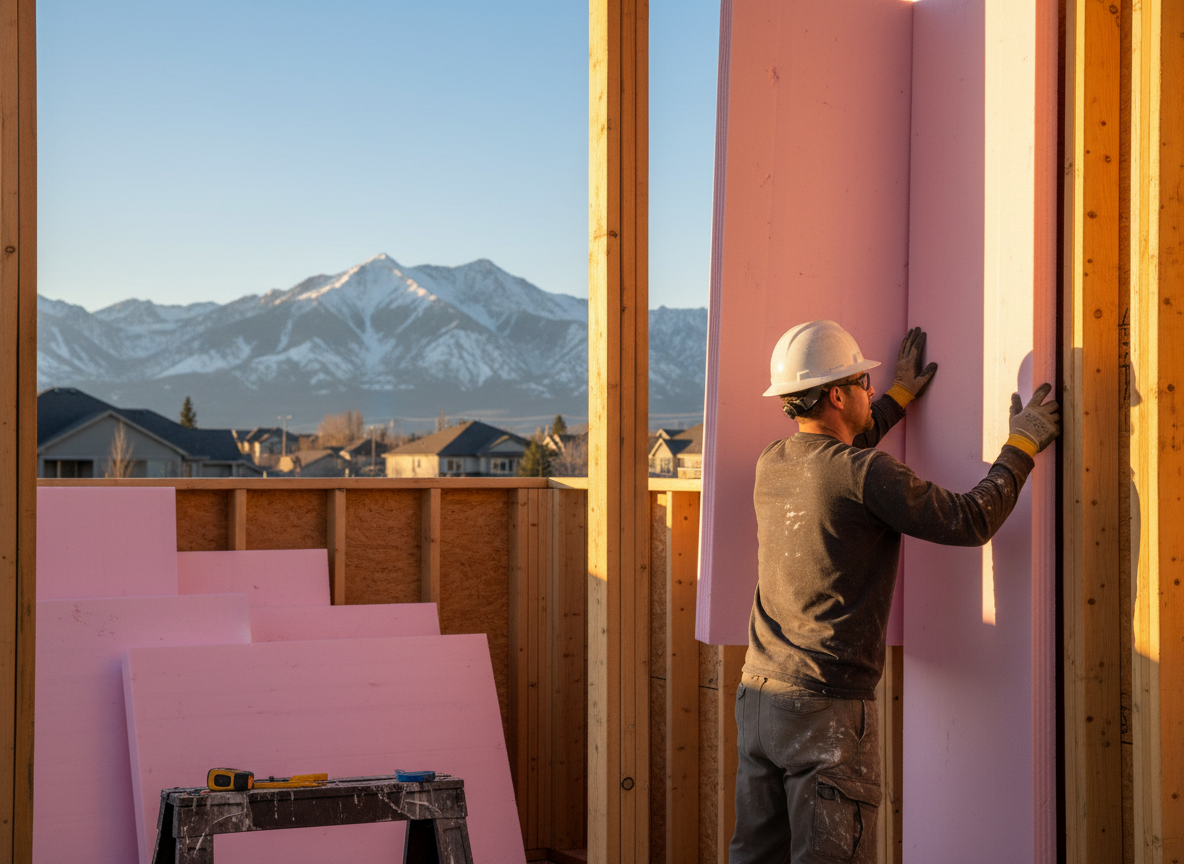
Foam board insulation in attics works well in Holladay because it creates a rigid thermal break that holds up under the area's hot summers and heavy winter snow loads. In neighborhoods like Mount Olympus and Cottonwood, many homes built before the 1990s have limited attic space and older rooflines that make loose-fill options less effective. Rigid boards cut precisely around trusses and can be sealed at edges to limit air movement that drives up heating costs once winter temperatures drop below freezing.
Salt Lake County building practices often leave gaps at knee walls and around recessed lights in Holladay Village homes. Foam board lets installers create continuous coverage without compressing material, which matters on sloped ceilings common in Olympus Hills Park area properties. Homeowners should watch for existing knob-and-tube wiring or inadequate ventilation before adding layers, since trapped moisture from summer humidity can lead to condensation on the cold side of the boards during long snowy periods.
Proper attachment matters on windy ridge lines near Millcreek and Cottonwood Heights. Fasteners and compatible tapes prevent boards from shifting when attic temperatures swing from over 100 degrees in July to well below freezing in January. This approach also works around existing ductwork and plumbing penetrations that are typical in Salt Lake County ranch and split-level homes.
Technician insight
In Holladay, the thing that catches most people out with foam board insulation is how quickly moisture shows up on the underside of boards in homes around Holladay Village when summer humidity meets the first cold snap. Older roof decks in Mount Olympus neighborhoods often have enough air leakage that you have to add extra perimeter sealing or the boards start to shift once the snow load hits.
Mount Olympus Attic Retrofit
A 1970s split-level near Olympus Hills Park showed high heating bills after winters with heavy snow. Inspection found gaps around old recessed lights and limited rafter depth. We installed rigid foam boards cut to fit the existing trusses, sealed every joint, and left ventilation channels open. The homeowner reported steadier attic temperatures the following season.
How it works
- 1
Site Assessment
Measure attic dimensions, check existing ventilation, and note roof deck condition in Holladay homes.
- 2
Material Selection
Choose appropriate thickness and R-value foam board for the home's age and exposure to Salt Lake County winters.
- 3
Cutting and Fitting
Cut boards to fit around trusses, lights, and vents while maintaining continuous coverage.
- 4
Sealing and Attachment
Apply compatible tape and fasteners to create an air-tight layer that handles temperature swings.
- 5
Final Inspection
Verify no gaps remain and confirm ventilation paths stay clear before leaving the property.
Pricing
Cost depends on attic size, access difficulty, and number of obstacles in older Holladay homes.