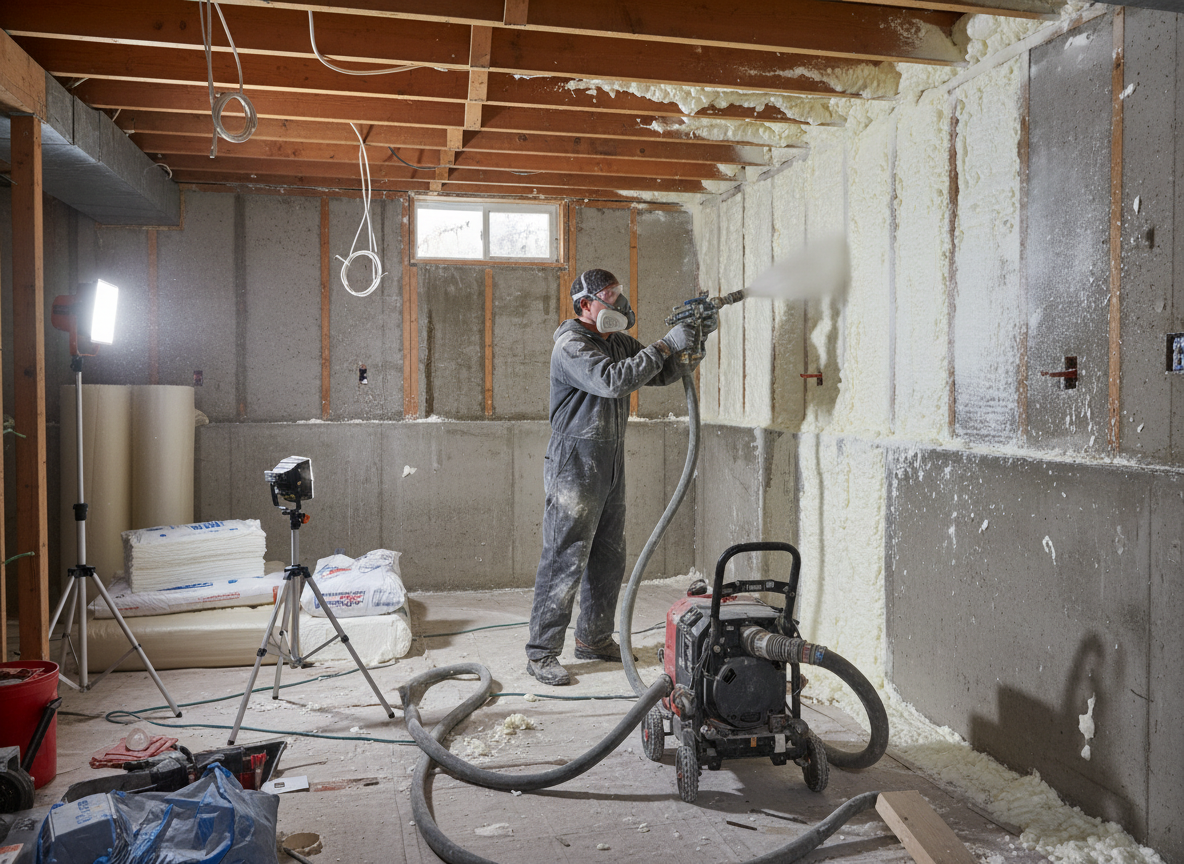
Holladay homes built before the 1980s in neighborhoods like Holladay Village and Mount Olympus often have uninsulated concrete basements that lose heat rapidly once winter temperatures drop below freezing. Semi-arid conditions with heavy snow load mean moisture can migrate through foundations from spring melt, so closed-cell spray foam or rigid foam boards with taped seams are commonly used to create both thermal and vapor control. Working around existing utilities and low ceilings requires careful cutting and sealing to avoid trapping humidity that leads to mold on rim joists.
In Cottonwood and nearby Millcreek, sloped lots near Olympus Hills Park frequently create walk-out basements where one wall sits below grade and another is exposed. This mix demands different R-values and detailing on each side, plus attention to how snow drifts against south-facing walls. Homeowners in these areas also deal with occasional radon concerns common to Salt Lake County, so any insulation upgrade includes provisions for proper venting rather than sealing everything tight.
Proper basement insulation here starts with checking for active water intrusion from irrigation runoff or poor grading, especially around older foundations in the Cottonwood Heights border zones. Materials must resist compression from backfill and allow inspection ports for future plumbing access. Skipping these steps often results in callbacks after the first heavy snow year when condensation appears on interior finishes.
Technician insight
In Holladay, the thing that catches most people out with basement insulation is how quickly meltwater from Olympus Hills Park slopes reaches foundations in older Holladay Village homes. If you don't fix the grading first, even the best closed-cell foam will trap the damp and create bigger problems by the next spring thaw.
Mount Olympus Walk-Out Basement
Homeowner noticed cold floors and condensation on lower walls after heavy snow. We found uninsulated concrete on the below-grade side plus poor drainage from the upslope yard. Added rigid foam boards with sealed seams and redirected surface water away from the foundation. Floors stayed warmer through the following winter with no new moisture issues.
How it works
- 1
Site Assessment
Inspect foundation walls, rim joists, and any existing moisture issues in the specific Holladay neighborhood.
- 2
Material Selection
Choose closed-cell foam or rigid boards suited to local winter freeze-thaw cycles and soil conditions.
- 3
Preparation and Sealing
Clean surfaces, address minor water paths, and install vapor barriers before insulation placement.
- 4
Installation and Finishing
Apply insulation, seal all edges, and ensure access points remain usable for future maintenance.
Pricing
Cost depends on basement size, wall height, and whether moisture remediation is required before insulation.