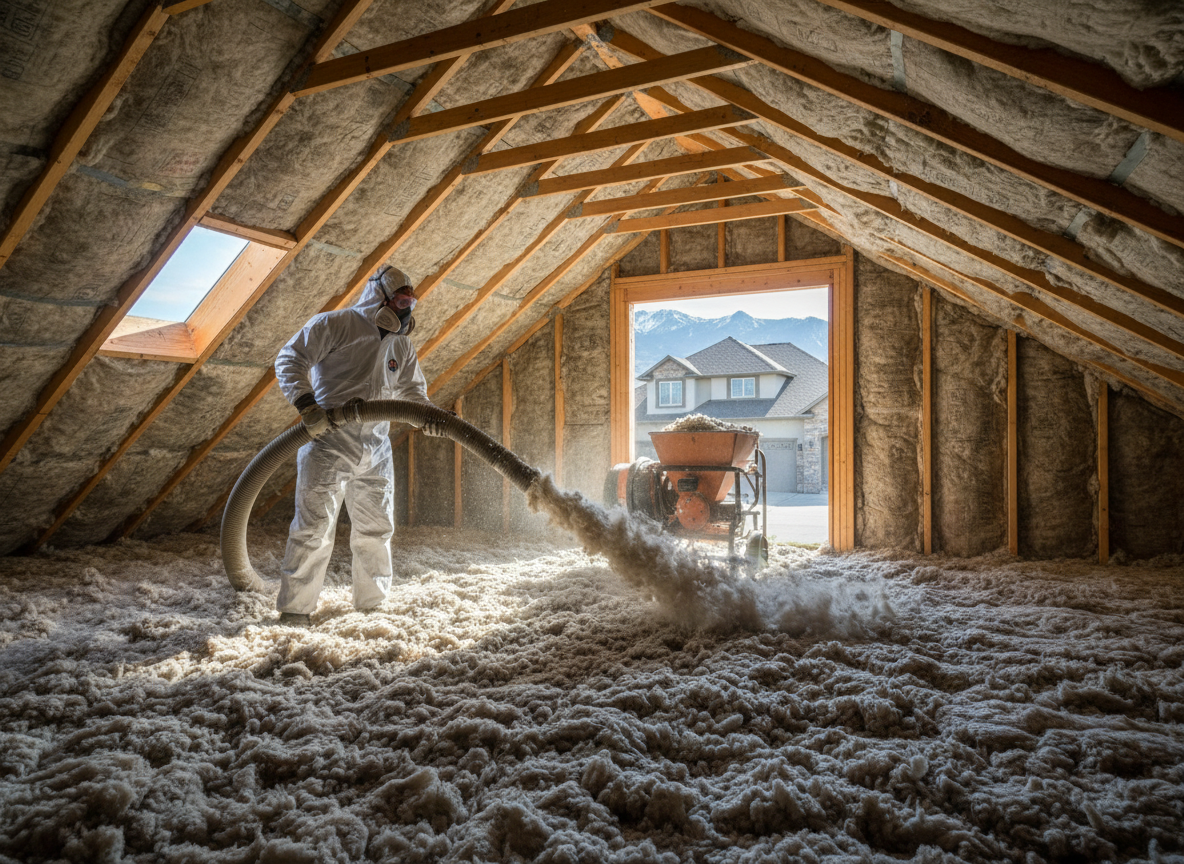
Blown in insulation works well in Holladay attics because it fills irregular spaces around joists and wiring that older homes in Mount Olympus and Cottonwood commonly have. Cellulose or fiberglass is blown to the recommended R-value for Salt Lake County winters, where temperatures drop sharply and snow loads sit on roofs for weeks. Proper depth prevents heat loss that shows up as ice dams along eaves near Holladay City Park. Technicians check for existing moisture from summer storms before starting, since the semi-arid climate still brings occasional heavy rain that can soak insulation if vents are blocked.
Homes built before the 1980s in Holladay Village often have single-layer batts that leave gaps along the perimeter where walls meet the roof deck. Blown in material reaches those edges without removing drywall, which matters on sloped lots near Olympus Hills Park where access is tight. Crews also seal recessed lights and bathroom fans first, because warm air escaping through those openings during cold snaps forces the heating system to run harder. In nearby Millcreek and Cottonwood Heights, similar stock shows the same pattern after decades of settling.
Summer heat in Salt Lake County pushes attic temperatures past 120 degrees, so blown in insulation must include proper ventilation to avoid trapping moisture that later freezes in winter. Ridgewarm Circle crews measure existing insulation depth at multiple points across the attic floor before adding material, ensuring even coverage that meets current energy codes without over-compressing. This approach reduces drafts felt on main floors during January cold fronts that sweep through the valley from the north.
Technician insight
In Holladay, the thing that catches most people out with blown in insulation is the uneven joist spacing in 1960s homes around Mount Olympus, where material settles into low spots after the first heavy snow load and leaves thin patches that let cold air through.
Mount Olympus Attic Upgrade
A Holladay homeowner noticed higher heating bills after several cold winters. We found thin spots and gaps around old wiring in the attic. We sealed the leaks then blew in additional cellulose to bring the entire floor to consistent depth. The house now holds heat better through the snowy season.
How it works
- 1
Attic Assessment
Walk the attic to measure current insulation depth, locate air leaks, and check for moisture near vents and recessed lights.
- 2
Preparation
Seal gaps around pipes, lights, and fans, then lay protective sheeting over stored items and access points.
- 3
Material Installation
Blow cellulose or fiberglass to uniform depth across the entire attic floor, paying extra attention to edges and corners.
- 4
Final Inspection
Verify coverage levels, restore access, and confirm ventilation remains clear before leaving the site.
Pricing
Cost depends on attic size, current insulation depth, and access difficulty in Holladay homes.