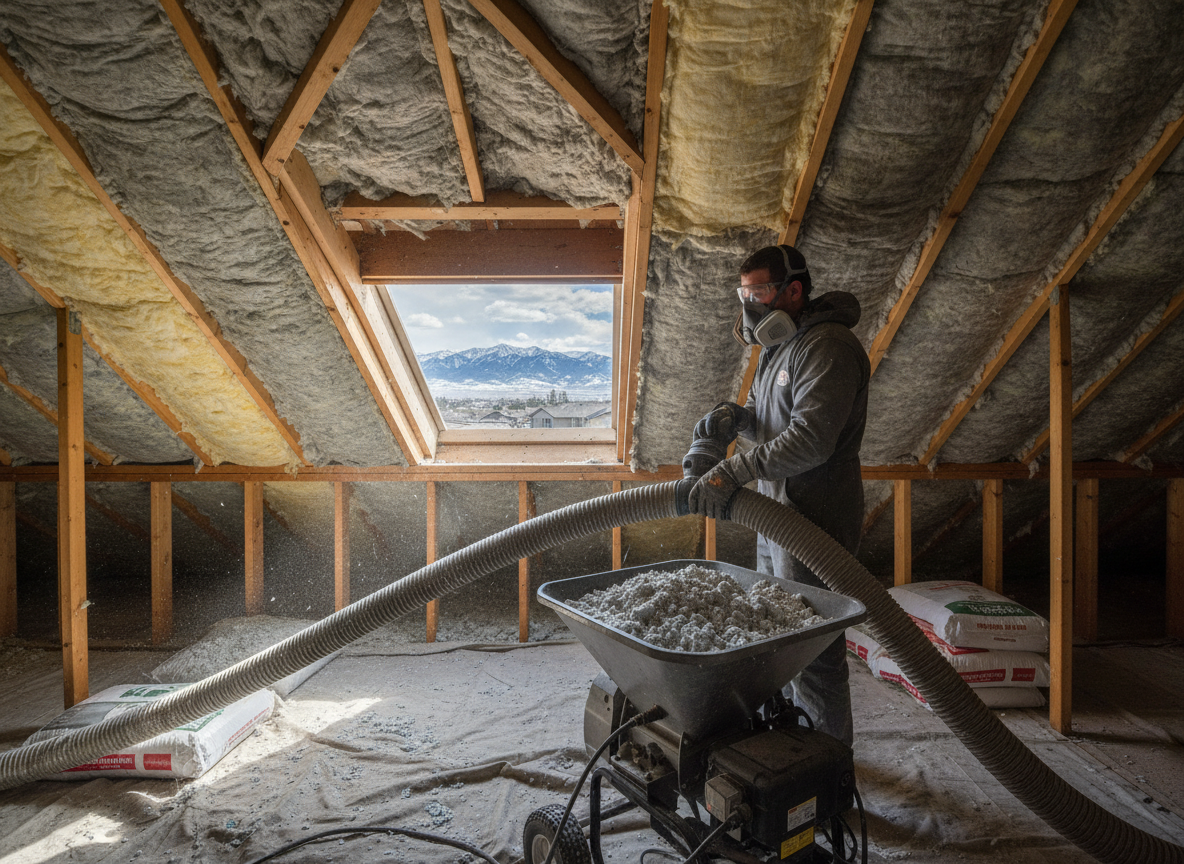
Cellulose insulation works well in Holladay because many homes in Mount Olympus and Cottonwood were built before modern energy codes and have open attic spaces that accept dense-pack material without major demolition. The semi-arid climate brings wide temperature swings, so the material’s ability to absorb and release small amounts of moisture helps limit condensation during the long snowy winters when attics stay cold for weeks. Installers must still check for existing ventilation paths around ridge and soffit vents before blowing, because blocked airflow turns the cellulose damp over time and reduces its R-value.
Technicians working in Holladay Village often find older batts that have settled or shifted, leaving gaps along the top plates and around recessed lights. Cellulose fills those voids more completely than fiberglass and settles less once installed at the correct density. Crews also seal bypasses at plumbing stacks and electrical penetrations first, because air movement through those paths carries the heat that drives up winter utility costs in Salt Lake County. Proper depth is verified with a probe rather than visual estimate, especially on homes near Olympus Hills Park where roof pitches vary and insulation can slide on steeper slopes.
Homeowners in Millcreek and Cottonwood Heights sometimes request cellulose after noticing ice dams along the eaves. The material slows heat loss from the living space, reducing the roof-surface temperature differential that causes melting and refreezing. Installers still advise keeping a six-inch clearance around bathroom exhaust fans and ensuring the attic hatch is insulated and gasketed, because those details determine whether the new cellulose actually delivers the expected comfort improvement through both the hot summers and the cold, dry winters typical of the area.
Technician insight
In Holladay, the thing that catches most people out with cellulose insulation is the older homes near Holladay City Park that still have single-pane windows and minimal ridge venting; the cellulose performs, but without addressing those two items the attic stays warmer than expected during our cold snowy winters and the material never reaches its full potential.
Mount Olympus Attic Fill
Homeowner in Mount Olympus noticed uneven ceiling temperatures after heavy snow. Inspection showed thin fiberglass along the perimeter and open gaps at the top plates. Crew sealed the bypasses then blew cellulose to uniform depth. The house now holds heat better through the winter and stays cooler on summer afternoons.
How it works
- 1
Attic Assessment
Inspect existing insulation, ventilation, wiring, and moisture signs in the specific home.
- 2
Air Sealing
Seal bypasses, penetrations, and gaps around lights and plumbing before material is added.
- 3
Material Installation
Blow cellulose to the required depth and density using access points suited to the roof structure.
- 4
Final Check
Verify coverage, clear vents, and confirm insulation stays away from heat sources.
Pricing
Pricing varies by attic size, access difficulty, and existing insulation condition; contact for an on-site assessment.