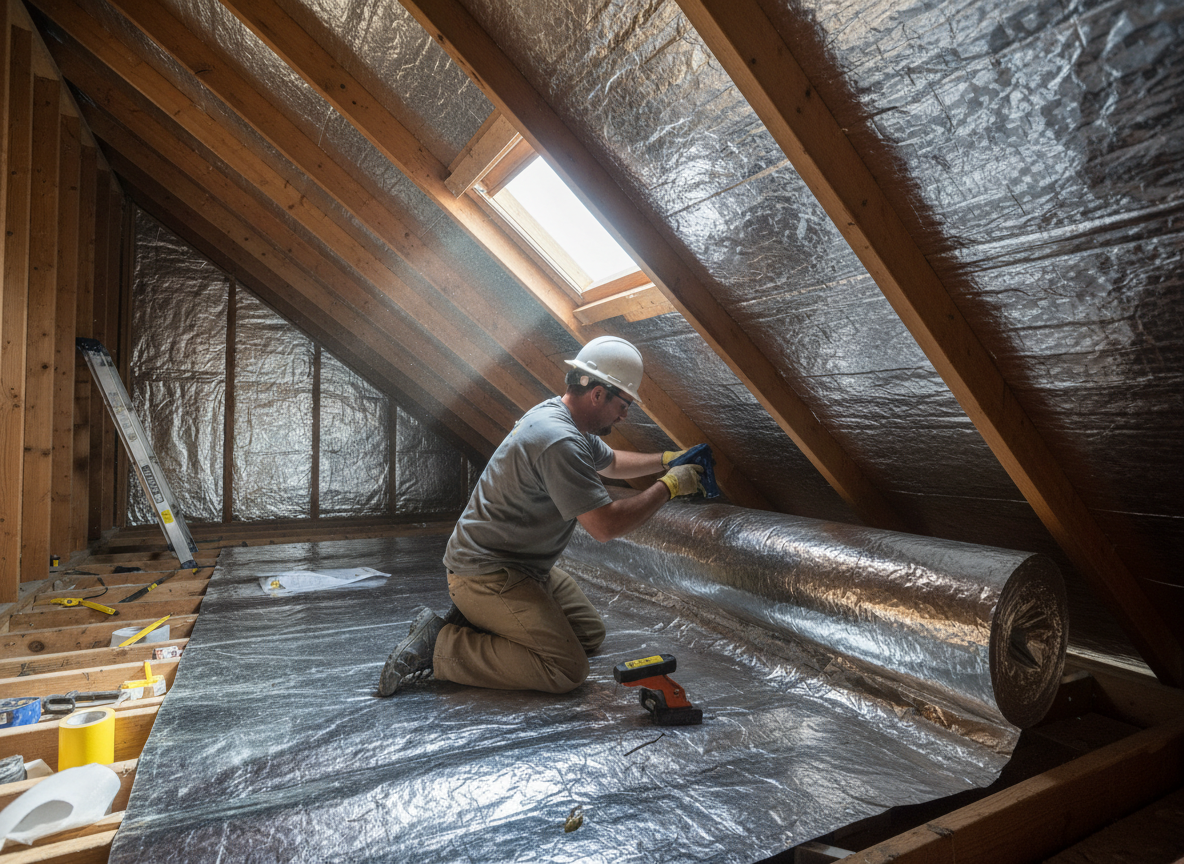
Double bubble insulation consists of two layers of polyethylene bubbles sandwiched between reflective foil faces. In Holladay Village and Mount Olympus homes, where many attics date from the 1960s through 1980s, the material is stapled or laid across rafters to create a radiant barrier. This approach works especially well in Salt Lake County's semi-arid climate because it reflects up to 97 percent of radiant heat during July and August while slowing heat escape when winter temperatures drop below freezing and snow loads the roof.
Proper installation requires maintaining a one-inch air space on the foil side facing the roof deck. In Cottonwood Heights and Millcreek border homes with cathedral ceilings or limited ridge venting, crews often add vent baffles first so the barrier does not block airflow. Without that gap the foil loses effectiveness and condensation can form on the cold side during the long heating season. Older homes near Holladay City Park frequently have knob-and-tube wiring or recessed lights that must be boxed out or replaced before the material goes in.
Homeowners sometimes confuse double bubble with standard fiberglass batts. The bubble product does not replace insulation value; it reduces the temperature difference the batts must fight. In neighborhoods around Olympus Hills Park, where summer attic temperatures routinely exceed 130 degrees, adding the radiant barrier before blowing in cellulose can lower cooling loads noticeably without disturbing existing insulation.
Technician insight
In Holladay the thing that catches most people out with double bubble insulation is the ridge vent height on 1970s split-levels around Mount Olympus. The low pitch leaves almost no room for the required air gap once you add baffles, so the foil ends up pressed against the sheathing and stops working the first winter the roof gets snow load.
Mount Olympus Split-Level Attic
Homeowner called after noticing second-floor rooms stayed hot even with the AC running. We found the existing batts compressed against the roof deck with no radiant barrier and blocked soffit vents. Installed double bubble with new baffles cut to fit the low ridge, restored airflow, and left the existing insulation in place. Upper rooms now stay 8-10 degrees cooler on summer afternoons without extra cooling runtime.
How it works
- 1
Attic Assessment
Measure square footage, check existing insulation depth, locate vents, lights, and wiring runs, and note access points from the ridge to the eaves.
- 2
Prep and Safety Setup
Install baffles where needed, box recessed fixtures, seal bypasses, and lay temporary walk boards to protect ceiling drywall.
- 3
Material Placement
Unroll and staple double bubble sheets with the foil side facing the roof deck, overlapping seams four inches and taping edges to maintain the air gap.
- 4
Final Inspection and Air Sealing
Verify continuous coverage, confirm venting remains open, and seal any penetrations around plumbing or electrical entries.
Pricing
Cost depends on attic size, access difficulty, and whether baffles or light boxing are needed; Ridgewarm Circle provides on-site quotes from the Holladay address.