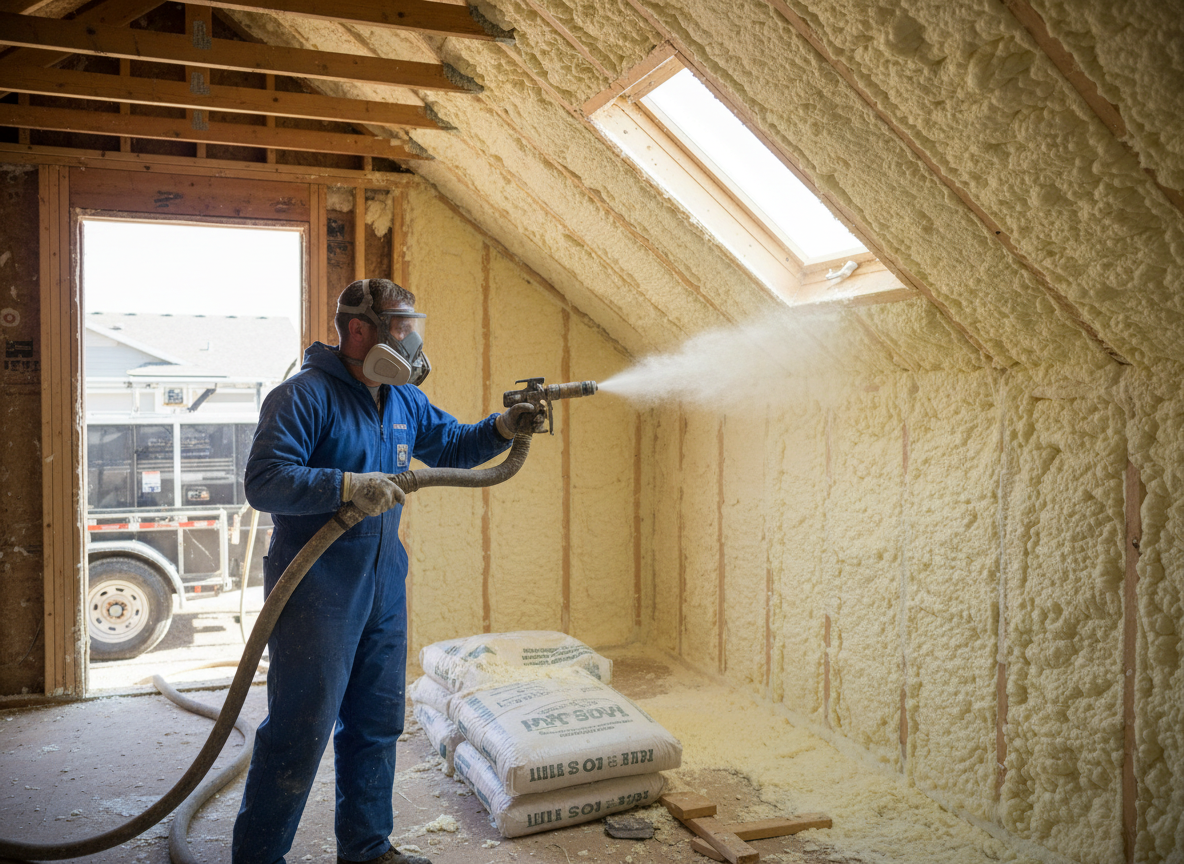
Holladay homes built before the 1980s in neighborhoods like Mount Olympus and Cottonwood often have thin or settled fiberglass batts that leave gaps around ceiling penetrations. In Salt Lake County's cold snowy winters these gaps allow warm air to rise, melt roof snow, and create ice dams along eaves near Holladay City Park. Blown-in cellulose or dense-pack fiberglass fills those voids while maintaining the ventilation channels required by current Utah energy codes.
Summer heat gain is another driver. Once temperatures climb in the semi-arid climate, an uninsulated attic can push indoor temps well above 80 degrees even with the AC running. Adding R-49 or higher insulation over existing material, combined with sealing recessed lights and bathroom fans, reduces the load on cooling systems for residents in Holladay Village and nearby Millcreek.
Edge cases appear on sloped lots near Olympus Hills Park where roof planes meet at complex angles. These intersections trap heat and moisture unless baffles are installed before insulation. Crews also watch for older knob-and-tube wiring still present in some Cottonwood Heights-adjacent properties; insulation must be kept clear or the wiring replaced first.
Proper depth and coverage matter more than material brand. After installation, infrared scans confirm uniform coverage and identify any remaining bypasses before the job is complete.
Technician insight
In Holladay, the thing that catches most people out with home insulation is the combination of older rafter bays and heavy winter snow loads in neighborhoods like Mount Olympus. Homeowners add thick insulation without baffles, then wonder why ice dams form along the eaves every spring.
Mount Olympus Attic Upgrade
A Holladay homeowner near Olympus Hills Park reported uneven heating and high winter utility bills. Inspection showed settled insulation and blocked soffit vents on a complex roof. We installed baffles, sealed bypasses, and blew in additional cellulose to reach uniform R-49. The home now maintains steady temperatures through both snowy winters and hot summers.
How it works
- 1
Attic Assessment
Measure existing insulation depth, check ventilation, and identify air leaks or wiring issues in the specific home.
- 2
Preparation
Seal penetrations, install baffles where needed, and protect electrical fixtures before adding new material.
- 3
Insulation Installation
Blow or lay material to target R-value while maintaining airflow paths required for Holladay winters.
- 4
Final Verification
Perform infrared scan and visual check to confirm uniform coverage and proper ventilation.
Pricing
Upfront quotes based on attic size, existing insulation condition, and access constraints common in Holladay homes.