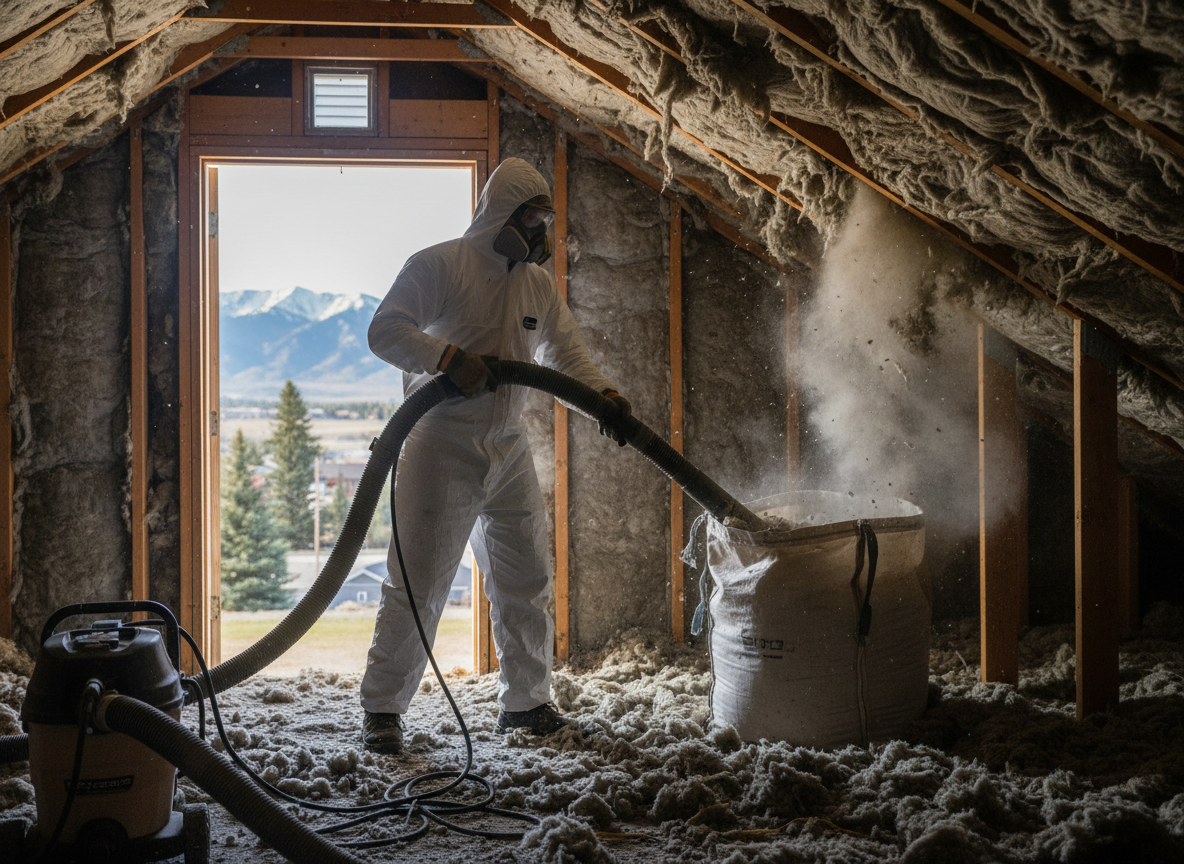
Holladay homes built before the 1980s in neighborhoods like Holladay Village and Mount Olympus often hold layers of old fiberglass or cellulose that have settled or absorbed moisture during heavy winter snow loads. Removing this material requires careful containment because the semi-arid summers quickly turn damp insulation into a dust hazard that can spread through attic vents into living spaces below. Crews working near Olympus Hills Park or along the benches above Cottonwood Heights routinely encounter knob-and-tube wiring and single-layer roof decks that demand slower, hand-removal techniques rather than full vacuum extraction.
Salt Lake County building practices from the mid-century era left many attics with minimal ventilation, so insulation removal must include checking for blocked soffits and ridge vents before new material goes in. Cold winters drive homeowners to request removal when ice dams form along eaves in Mount Olympus and Cottonwood areas, while hot summers make the same attics ovens once the old insulation is gone. Proper disposal follows Salt Lake County landfill rules for construction debris, and crews stage trucks on narrow streets typical of these neighborhoods to avoid blocking access for residents.
Edge cases appear in homes near Holladay City Park where previous owners added blown-in material over existing batts, creating hidden moisture pockets against the roof deck. Removal crews must pause to test for mold before disturbing the layers, especially after spring snowmelt raises attic humidity. This step prevents spores from circulating into Millcreek or Salt Lake City homes connected by shared attic spaces in attached garages.
Technician insight
In Holladay, the thing that catches most people out with insulation removal is the single-layer roof decks on 1960s homes in Mount Olympus and Holladay Village. Once you pull the old material you find almost no ventilation, so any remaining moisture from winter snow sits right against the sheathing and turns into a mold job if you don't address the soffits before leaving.
Hidden Moisture in Mount Olympus Attic
Homeowner called after noticing higher heating bills in a 1972 house near Olympus Hills Park. Removal revealed two layers of settled cellulose holding moisture from the previous winter's snow. Crew extracted the material by hand around knob-and-tube wiring, confirmed dry decking, and improved soffit airflow before finishing.
How it works
- 1
Site Assessment
Technician enters the attic through the access point, checks for wiring, moisture stains, and ventilation paths while noting the existing insulation type and depth.
- 2
Containment Setup
Plastic sheeting and negative-air machines seal the attic hatch and any ceiling penetrations to keep dust from entering the home during removal.
- 3
Material Extraction
Insulation is removed by hand in tight areas or with vacuum equipment where safe, separating debris into sealed bags for proper county disposal.
- 4
Final Inspection
Attic is checked for remaining debris, wiring issues, and ventilation blockages before the crew removes containment and restores the access point.
Pricing
Pricing depends on attic size, insulation depth, and access difficulty common in Holladay's older homes; quotes provided after on-site assessment.