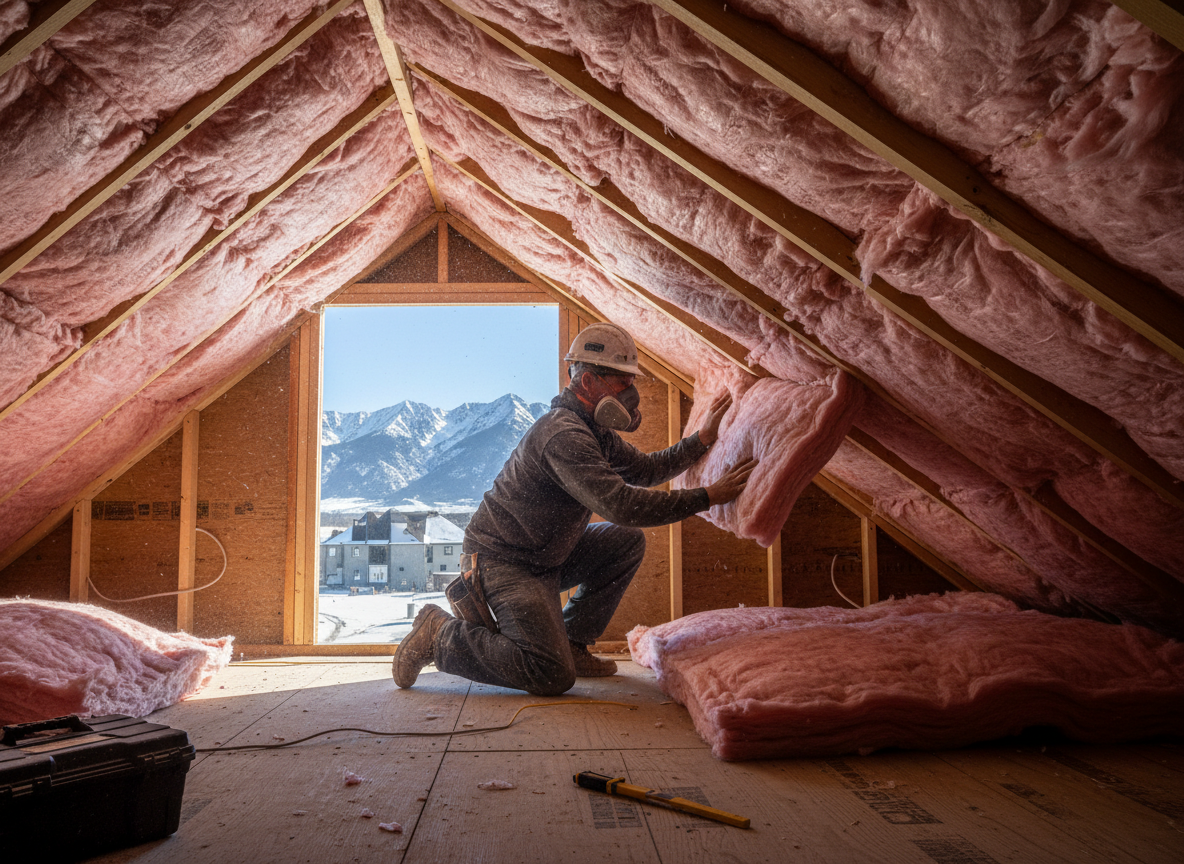
Holladay homes built before the 1980s in neighborhoods such as Mount Olympus and Cottonwood often have minimal roof insulation that fails once winter snow loads press down and summer heat builds under the roof deck. Adding blown-in cellulose or fiberglass batts between rafters requires checking for existing moisture from ice dams that form along eaves during freeze-thaw cycles common in Salt Lake County. Proper baffles and ridge venting must be installed to keep airflow moving, otherwise condensation soaks new material and reduces R-value within a single season.
Roof insulation work here differs from new construction because many Holladay Village properties have low-pitch roofs and limited attic access that forces technicians to work from the exterior or through small scuttle holes. Spray foam is sometimes chosen along the roof deck in Cottonwood Heights border homes where cathedral ceilings leave no room for traditional batts, but the material must be closed-cell to resist the humidity spikes that occur after heavy spring rains. Homeowners in Millcreek and Salt Lake City edges frequently discover knob-and-tube wiring during insulation removal, requiring coordination before any new material is placed.
Edge cases appear regularly near Olympus Hills Park where mature trees drop needles that clog gutters and push water back under shingles, so insulation crews always inspect flashing and underlayment first. Salt Lake County energy codes now push for higher R-values in roof assemblies, and skipping the ventilation upgrade in a hot semi-arid summer can cause sheathing to warp within a few years. These details only surface when the crew has opened the roof plane and seen the actual conditions.
Technician insight
In Holladay, the thing that catches most people out with roof insulation is the combination of heavy winter snow and older rafter bays in Mount Olympus homes that were never built with ridge venting. Homeowners add thick insulation right up to the deck and then wonder why ice dams keep forming along the eaves every spring. The fix is almost always adding proper baffles first, not just more material.
Mount Olympus Roof Insulation Upgrade
A 1970s home near Olympus Hills Park showed sagging insulation and repeated ice dams along the north eaves. The crew found blocked soffit vents and compressed fiberglass that had lost most of its R-value. They removed the old material, installed new baffles and ridge vents, then blew in cellulose to the required depth. The homeowners reported no further ice dam issues the following winter.
How it works
- 1
Initial Assessment
Technicians arrive at the Holladay address and inspect the roof deck, existing insulation, ventilation, and any signs of moisture or ice dam damage from the street and attic side.
- 2
Material Selection
The crew reviews access points and roof pitch, then recommends cellulose, fiberglass, or spray foam based on the home's age and whether the attic is vented or conditioned.
- 3
Preparation and Safety
Old material is removed if needed, wiring and plumbing are protected, and baffles plus ridge vents are added to maintain airflow before new insulation is installed.
- 4
Installation and Final Check
Insulation is placed to uniform depth, all penetrations are sealed, and the team verifies ventilation remains clear before leaving the site.
Pricing
Pricing varies by roof access, existing insulation condition, and chosen material; Ridgewarm Circle provides upfront quotes after the on-site assessment.