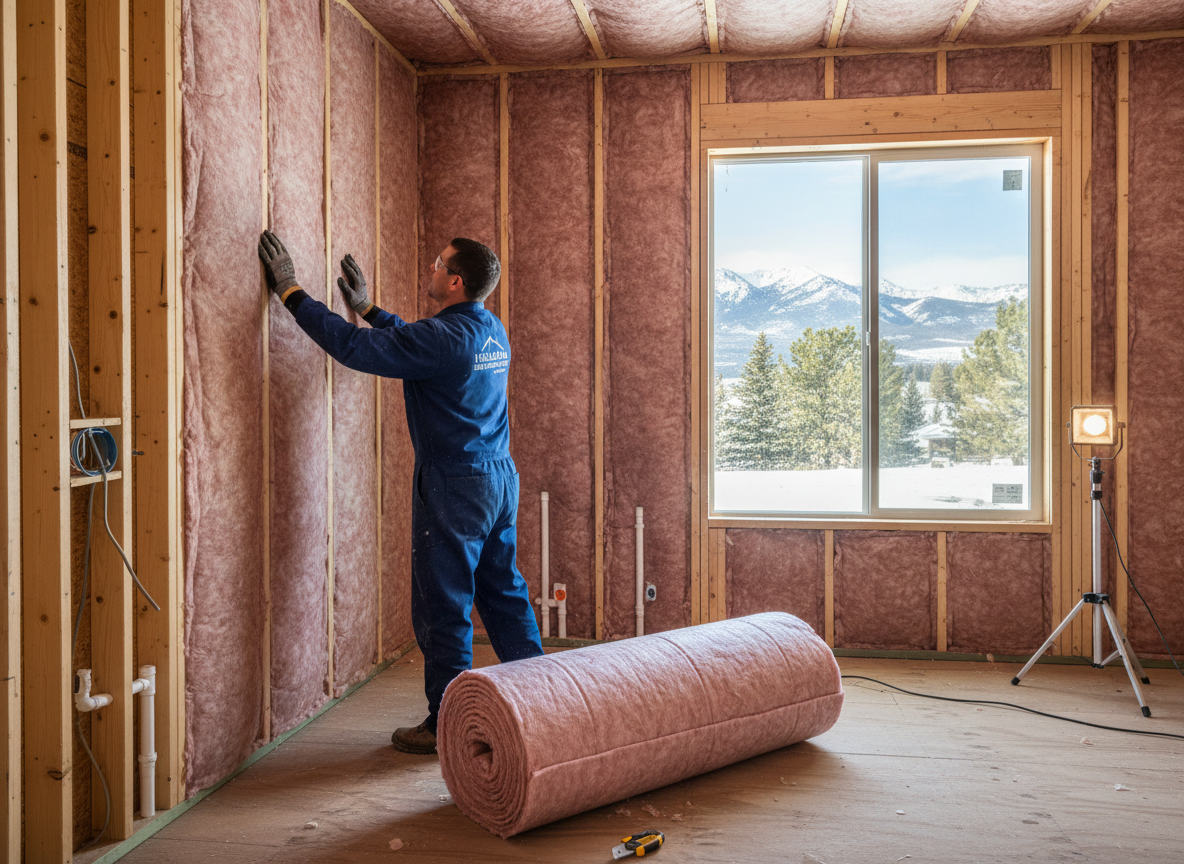
Holladay homes built before 1980 in neighborhoods like Mount Olympus and Cottonwood often have uninsulated cavities behind brick or stucco. Blown cellulose or dense-pack fiberglass fills these spaces through small exterior holes, cutting heat loss during the long snowy winters and slowing heat gain in semi-arid summers. Crews check for knob-and-tube wiring and moisture stains first, because adding insulation to damp walls in Salt Lake County can trap problems that later require opening the wall again.
Access varies by terrain. Properties near Olympus Hills Park sit on slopes where one side of the house may be at grade while the opposite side has a full basement wall, changing where we drill and how we seal. In Holladay Village the lots are smaller, so equipment must stay on the driveway and debris removal happens the same day. We also verify that new insulation meets current energy code R-values without blocking existing vents in the rim joist.
Homeowners sometimes confuse wall insulation with simple exterior foam board. That approach works on new construction but fails on existing Holladay homes because it cannot reach the interior cavities between studs. We use infrared scans on cold mornings to locate empty bays before any drilling begins, preventing missed sections that would otherwise show up as cold spots once winter arrives.
Technician insight
In Holladay the thing that catches most people out with wall insulation is the 1950s brick veneer homes around Holladay City Park where the brick has settled and created hidden gaps at the top plate; if you don’t rod those gaps from inside the attic before blowing, cold air still pours down the wall even after the cavities look full.
Mount Olympus Brick Home Cold Wall
A homeowner in Mount Olympus noticed one bedroom stayed colder than the rest of the house during winter. We found empty cavities behind settled brick and knob-and-tube wiring that blocked standard fill. We switched to smaller injection ports and hand-packed around the wiring, then verified with a thermal scan. The room now holds heat evenly through the snowy season.
How it works
- 1
Initial Assessment
Walk the exterior and interior to identify wall type, existing insulation, and any moisture or wiring concerns typical in Salt Lake County homes.
- 2
Material Selection
Choose dense-pack cellulose or fiberglass based on wall depth and access points found in Mount Olympus and Cottonwood Heights properties.
- 3
Installation
Drill small holes, fill cavities from the outside, then patch and match exterior finish while keeping work contained to the driveway.
- 4
Final Verification
Run a post-install thermal scan on a cold day to confirm even coverage before leaving the site.
Pricing
Cost depends on square footage of walls, number of stories, and whether access requires scaffolding on sloped lots; we provide written quotes after the site visit.