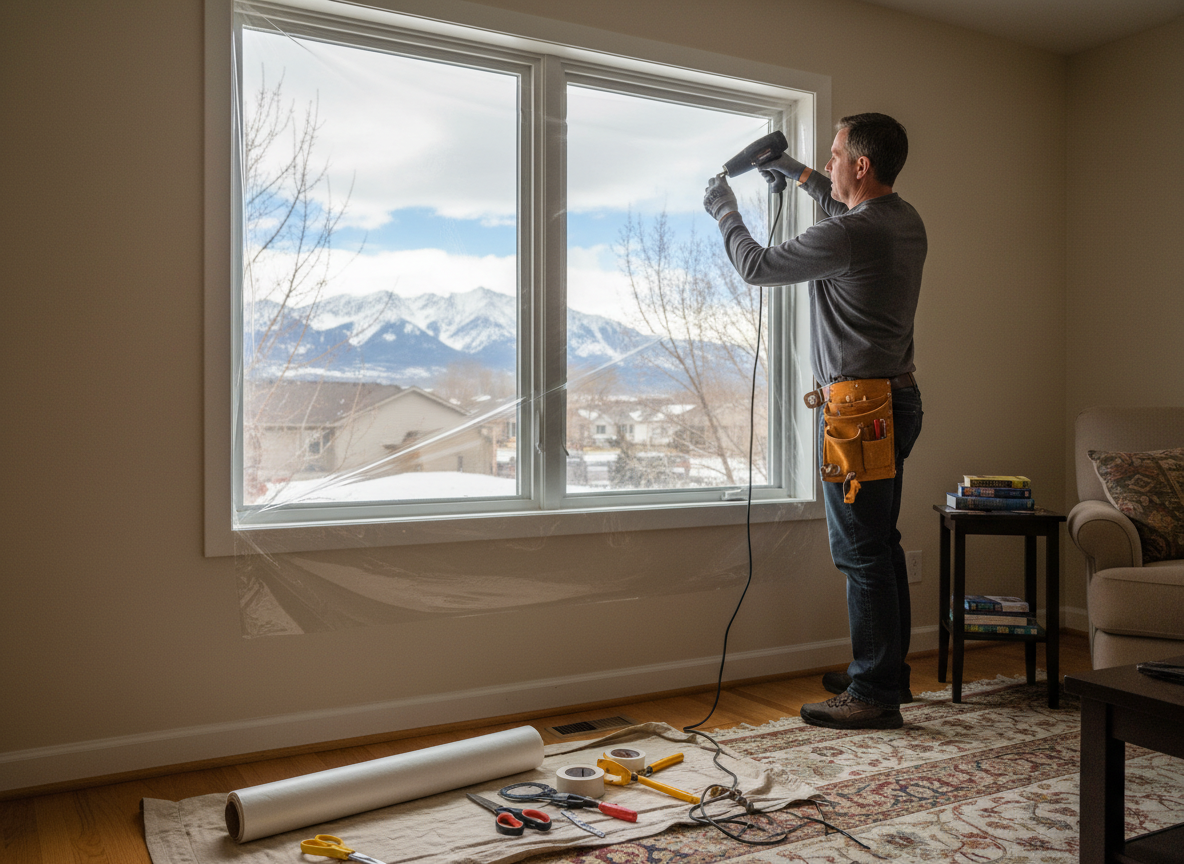
Holladay homes built before the 1990s often feature single-pane or aluminum-framed windows that leak heat during the long snowy winters and allow excessive solar gain in summer. Proper window insulation starts with assessing the frame condition and sash operation rather than simply adding film. In neighborhoods like Mount Olympus and Holladay Village, many properties sit on sloped lots where wind-driven snow packs against lower sills, accelerating seal failure. Materials such as compression weatherstripping, butyl caulk, and low-E storm panels perform better here than basic plastic kits because they handle the freeze-thaw cycles common in Salt Lake County without cracking.
Edge cases include original casement windows in Cottonwood Heights properties where the crank mechanisms have settled, creating gaps that standard tape cannot close. Utah energy code requires attention to air sealing at the rough opening when any window work occurs, yet many homeowners skip this step and later see moisture issues between the glass and storm panel. Experienced crews check for existing weep holes and ensure they remain clear so melting snow does not pool inside the frame. Using closed-cell foam tape on the interior stops and exterior-grade silicone on the exterior stops prevents both air infiltration and the condensation that appears on cold mornings after heavy snowfall.
Terrain around Olympus Hills Park creates microclimates where afternoon sun hits south-facing windows harder than in flatter Millcreek sections, making solar-control film a practical addition alongside insulation. Homeowners frequently overlook the junction between the window sill and the stucco or brick veneer common in the area; water migrates behind the trim during spring thaw and ruins new insulation if not addressed first. A thorough job includes removing old caulk completely, installing backer rod where gaps exceed one-quarter inch, and verifying the sash still operates smoothly so the insulation does not create a new maintenance problem.
Technician insight
In Holladay the thing that catches most people out with window insulation is the single-pane aluminum windows common in Mount Olympus homes built on sloped lots; the cold snowy winters drive ice into the frame tracks if you only seal the interior and ignore the exterior sill joint where snow packs against the stucco.
Drafts in Cottonwood Home
Homeowner reported cold air near living-room windows during January storms. Inspection found deteriorated weatherstripping and settled sashes on south-facing units. Crew removed old material, installed new compression strips and exterior caulk, then added low-E film. Heating load dropped noticeably once the snow returned.
How it works
- 1
Site Assessment
Inspect every window for frame condition, sash operation, and existing seals while noting exposure to prevailing winter winds.
- 2
Preparation
Remove old caulk and debris, clean surfaces, and confirm weep holes remain open to handle snow melt.
- 3
Material Installation
Apply weatherstripping, caulk, and any storm panels or film chosen for the specific exposure and window type.
- 4
Final Check
Test sash movement, verify no new condensation points, and confirm the home maintains airflow balance.
Pricing
Cost depends on number of windows, frame material, and whether storm panels or film are added.