2026-10-24 ·
Attic Insulation and Summer Heat Gain Near Big Cottonwood Canyon
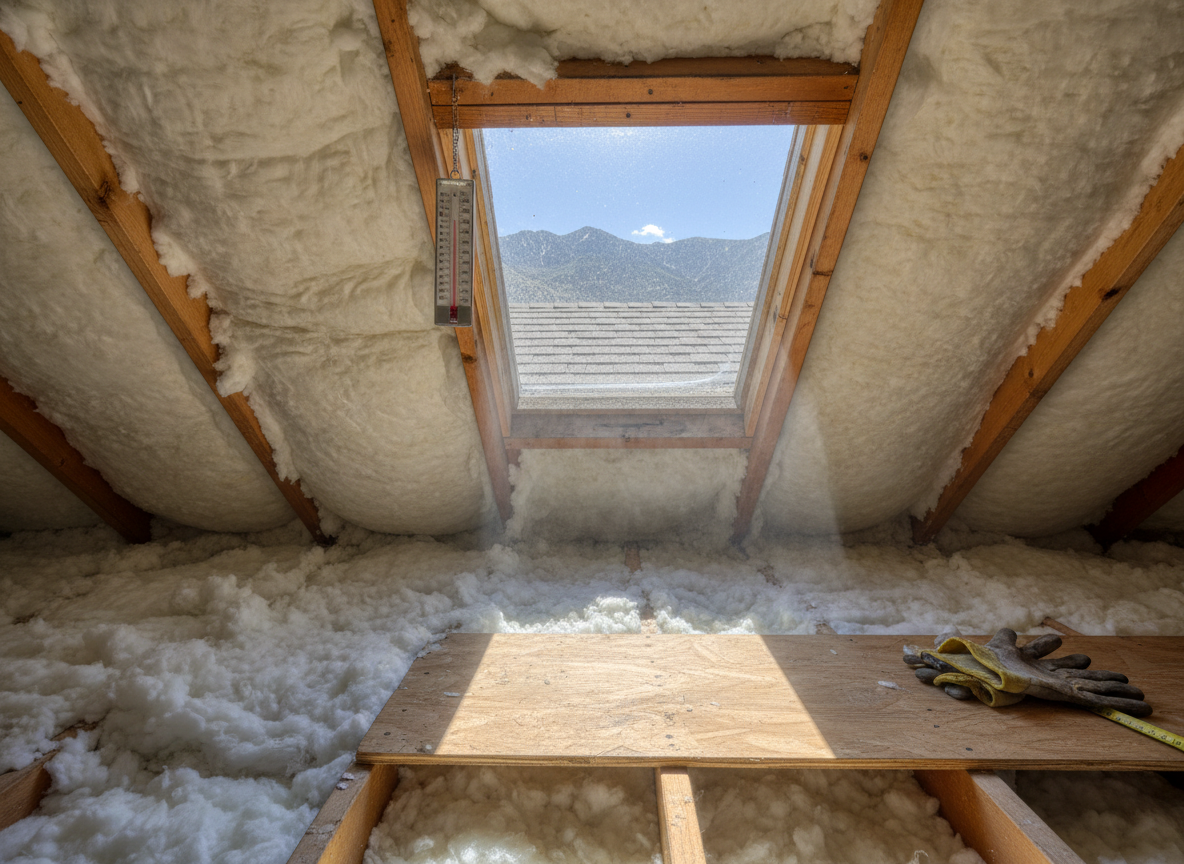
Attic insulation installed to current standards cuts summer heat gain through ceilings in homes near Big Cottonwood Canyon by blocking radiant heat that builds up under roofs during long daylight hours. In Holladay the semi-arid climate brings daytime highs often above 90 degrees while nights cool quickly, so the barrier must hold temperature swings steady inside without relying on constant mechanical cooling.
Heat Patterns Near Big Cottonwood Canyon
Holladay sits at the mouth of Big Cottonwood Canyon where afternoon winds can push hot air across roofs in Mount Olympus and Cottonwood neighborhoods. The same slopes that deliver winter snow also reflect intense summer sun onto south-facing attics for six to eight hours daily. Pre-1980 homes common in Holladay Village and around Holladay City Park often have thin original insulation that allows attic temperatures to climb 30 degrees above outdoor readings. This stored heat radiates downward through ceilings into living spaces long after sunset. Salt Lake County summers feature low humidity so the primary load is sensible heat rather than moisture, making reflective and thick fibrous barriers especially effective. Homes closer to Olympus Hills Park experience slightly more shade from canyon walls yet still face peak loads when canyon breezes stall. These conditions require insulation that maintains R-value even when attic air reaches 140 degrees.
Selecting Materials for Local Summer Loads
Blown-in cellulose or fiberglass settles into the irregular joist bays typical of Holladay ranch and split-level homes built between 1960 and 1985. These materials fill gaps around recessed lights and wiring without compressing, preserving airflow paths that prevent moisture buildup during the brief but intense monsoon rains that reach the Salt Lake Valley. Spray foam works well along the roof deck in newer Cottonwood Heights properties where cathedral ceilings leave little room for thick batts. In both cases the goal remains the same: create an unbroken thermal plane that stops heat before it reaches the ceiling drywall. Residents in Millcreek and Murray often combine attic insulation with attic insulation upgrades that also address knee-wall sections common in tri-level floor plans. The semi-arid air dries quickly after storms, so vapor-permeable products avoid trapping the small amounts of moisture that do enter during summer.
Installation Details in Holladay Housing Stock
Technicians working from 1895 E Rodeo Walk Dr Suite B200 begin by verifying existing ventilation before adding material so that ridge and soffit paths remain clear. In neighborhoods west of Holladay City Park, many attics contain old batts that have settled or been disturbed by rodent activity, requiring removal before new layers go in. Near the canyon mouth, crews often add baffles along eaves to keep canyon winds from pushing insulation against the roof deck. The work takes place during early morning hours when temperatures are lowest, protecting both the crew and the material performance. Homes in the Cottonwood area frequently have 2x6 or 2x8 ceiling joists that allow 10 to 14 inches of insulation depth without covering recessed fixtures. Each project accounts for the specific roof pitch and orientation relative to Big Cottonwood Canyon so the thickest coverage lands where solar gain is greatest.
Ventilation Balance During Peak Heat
Utah inversions are rare in summer yet the same stack effect that drives winter airflow must still function when attic temperatures exceed 130 degrees. Balancing attic insulation with ventilation during Utah inversions remains relevant because blocked vents turn an insulated attic into a heat battery. Ridge vents combined with continuous soffit intake work best on the gabled roofs common along the canyon corridor. In flat or low-slope sections found in some Holladay Village commercial conversions, solar-powered attic fans provide the needed exhaust without adding electrical load during the day. Proper balance keeps the insulation dry and maintains its rated performance through repeated 90-plus degree days.
Planning Upgrades for Cottonwood Heights Homes
Homeowners in Cottonwood Heights who schedule work through the 24/7 line can time projects for shoulder seasons when daytime highs stay below 80 degrees. This avoids stressing new material during extreme heat and lets crews work without portable cooling. The same insulation that limits summer heat gain also reduces winter heat loss when canyon temperatures drop below freezing, delivering year-round performance. Checking the related article on what Holladay residents pay for attic insulation upgrades gives current material and labor ranges for the exact square footage and access conditions found in local homes.